

Nestle’s Lessons From Joining the Dud Deals Club
The Swiss confectioner has finally achieved an exit from its purchase of a biotech focused on alleviating peanut allergy. But why did it buy the firm to begin with?
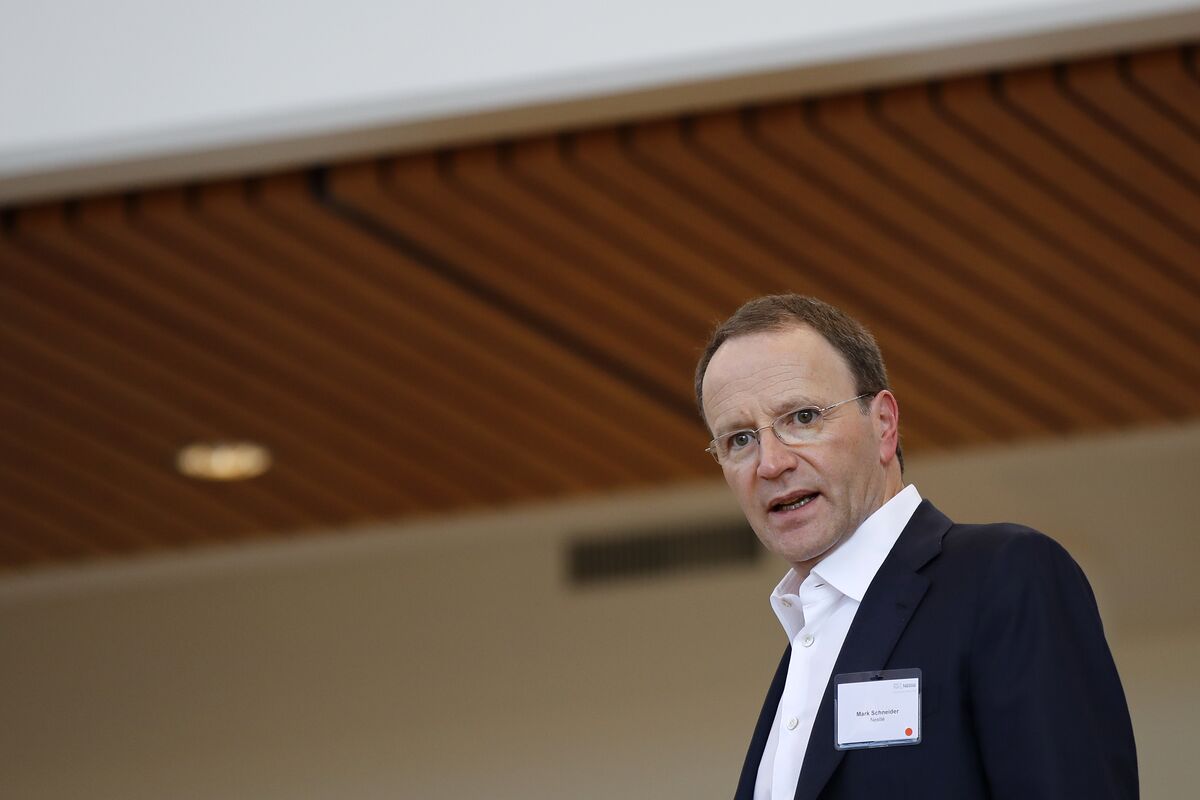
Nestle CEO Mark Schneider
Photographer: Stefan Wermuth/BloombergThe consumer industry’s hunger for reinvention is a well-known driver of risky deal-making. So it’s little wonder that Nestlé SA’s 2020 acquisition of a biotech specializing in peanut allergy became a waste of time and money. Even so, a company as well regarded as the $318 billion Swiss confectioner shouldn’t be adding to the list of transactions that have gone awry.
Nestlé took full control of Aimmune Therapeutics Inc. months after the pandemic struck, seemingly exploiting a fall in the US-listed company’s shares. Despite paying a 174% takeover premium, the offer price was comfortably below Aimmune stock’s all-time high. Nestlé already owned a stake and so was familiar with what it was buying. The valuation on taking the keys was just $2.6 billion, making the purchase tiny relative to Nestlé’s market value. And the chocolate maker was getting hold of Palforzia, the first US-approved treatment to help reduce the frequency and severity of allergic reactions to peanuts in children.
Up Next
Nestle’s Lessons From Joining the Dud Deals Club