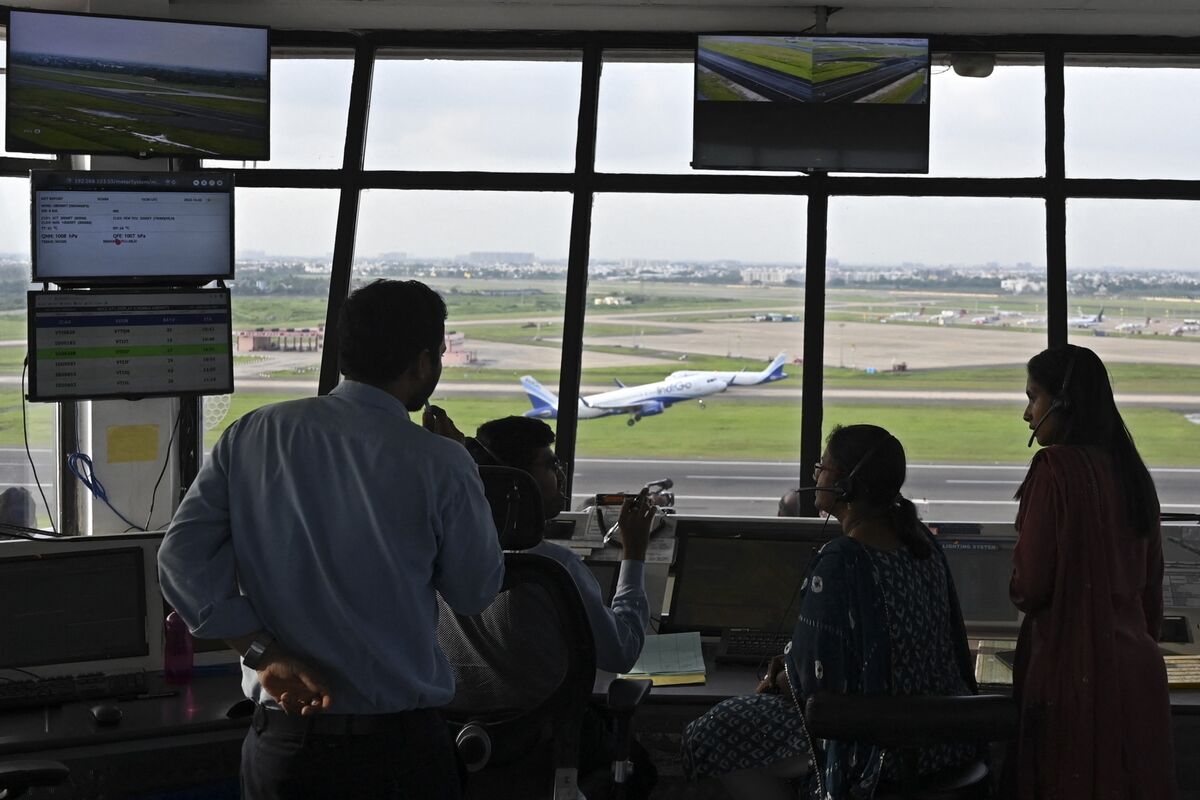
We need more air traffic controllers to safeguard our skies, but recruiting them won’t be easy.
Flying the increasingly unfriendly skies.
Photographer: Arun Sankar/AFP via Getty Images
Air traffic control is a highly skilled but largely invisible profession that’s sometimes compared to playing 3D chess — except a wrong move can result in disaster, not just checkmate. A century after the first ATC services began in Britain, commercial aviation’s safety record remains impressive yet the guardians of our skies are starting to appear worryingly overstretched; that neglect must be addressed via greater investment in both staffing and technology.
Employee shortages stemming partly from a hiatus in recruitment and training during the pandemic, as well as workers retiring early, have left air navigation authorities struggling to cope with rebounding leisure travel, war-induced airspace restrictions and more frequent storms. Passengers have faced long delays and canceled flights, while airlines are shouldering extra costs.
Up Next
Why $200,000-a-Year Job Playing 3D Chess Won't Fly