How Cities Should Compensate Residents for Toxic Exposure
Houston is taking the first step toward reparations by relocating residents exposed to contamination. It should do more.
A plan by the city of Houston to relocate residents exposed to pollution lays the foundation for local reparation programs.
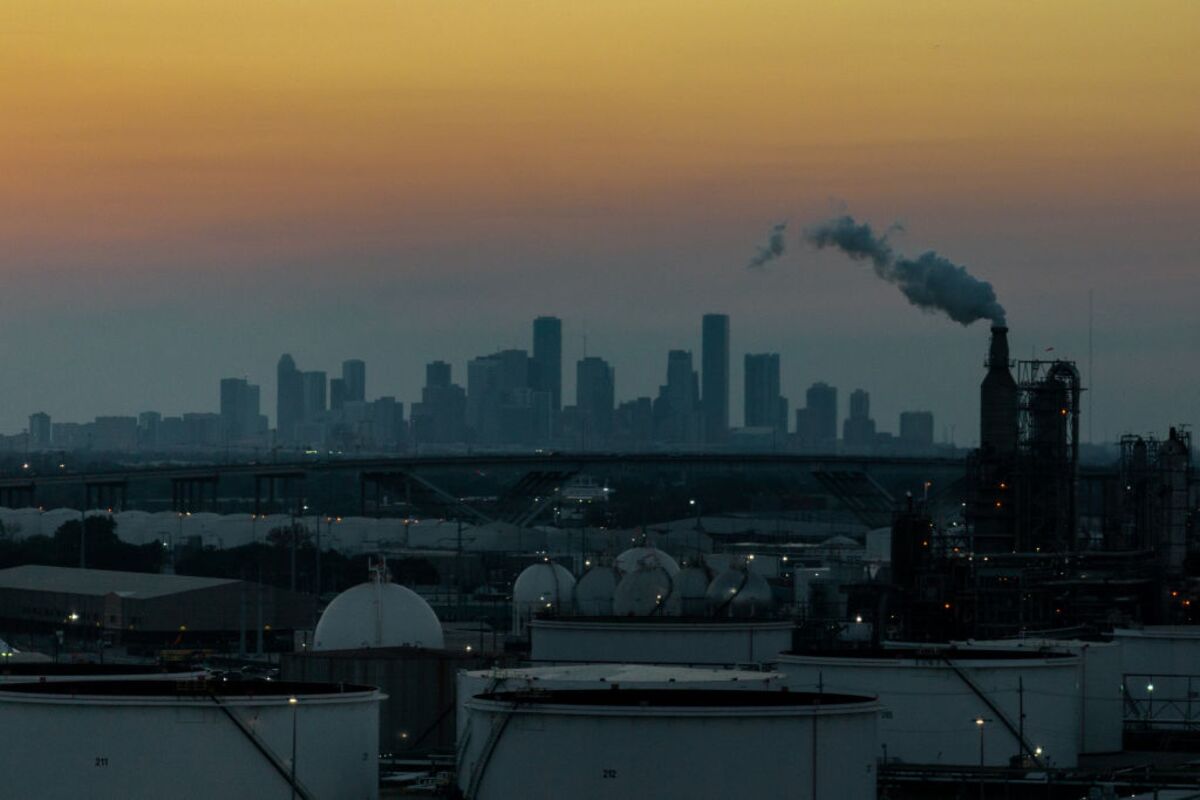
Photographer: Brandon Bell/Getty Images North AmericaIn July, the city of Houston announced plans to start relocating residents living near the Union Pacific railyard, a toxic site thick with carcinogenic pollution.
The relocation package, estimated at an initial cost of $24 – $26 million, is a substantial breakthrough for the residents of the Black and Latino-majority neighborhood who’ve rallied for years around abnormally high rates of morbidity and death in their community. A statement from Houston Health Department Director Stephen Williams says that 79% of all soil samples taken in the surrounding area exceed the US Environmental Protection Agency’s regional cancer screening level, with the highest concentration reaching more than 1,900 times the limit. The EPA found four different types of cancer clusters and rates of childhood leukemia 350% higher than expected. Last year the EPA struck a legal agreement with Union Pacific requiring the company to investigate contamination at its railyard site.
Up Next
How Cities Should Compensate Residents for Toxic Exposure