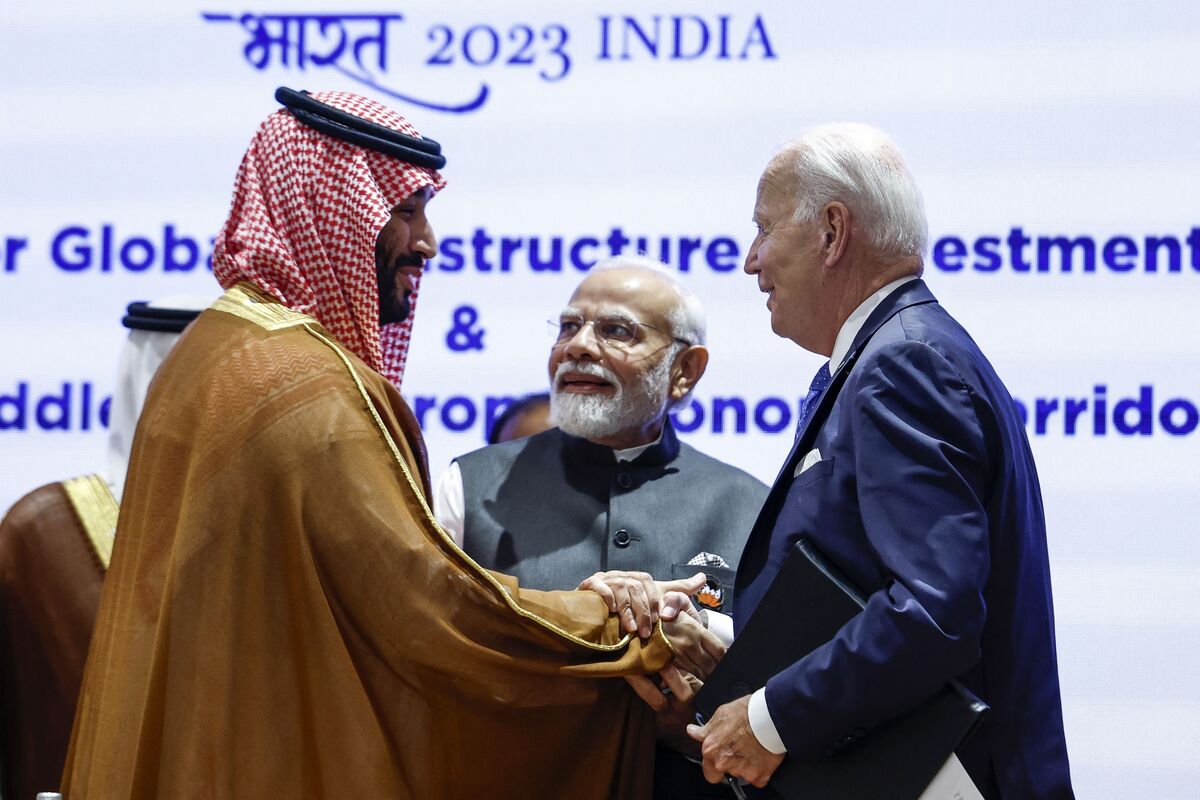
This Silk Road May Actually Lead Somewhere
A proposed ship-and-rail corridor from India to Europe could bind together several crucial countries and reinforce US influence in the Middle East.
Coming together.
Photographer: Evelyn Hockstein/AFP/Getty Images
At a speech in Kazakhstan 10 years ago this month, Chinese President Xi Jinping first proposed what would become the Belt and Road Initiative. In the decade since, Chinese infrastructure investment soared globally before retreating. Critics have often complained that BRI financing is expensive and misdirected, and that it comes with geopolitical strings attached. On the other hand, it has until recently been the only game in town. Nobody else seemed willing to fund connectivity where and how developing countries wanted it.
Is that finally beginning to change? At the G-20 summit last weekend, the leaders of several countries announced what they called the India/Middle East/Europe corridor, or IMEC. The idea is simple enough: a sea route from the western coast of India to the Arabian Gulf; a rail link from the Gulf ports to the Levant; and then across the Mediterranean into ports in southern Europe, in Italy or Greece.
Up Next
This Silk Road May Actually Lead Somewhere